
Certainty & Emotions: The Hedonic Treadmill of Anxiety
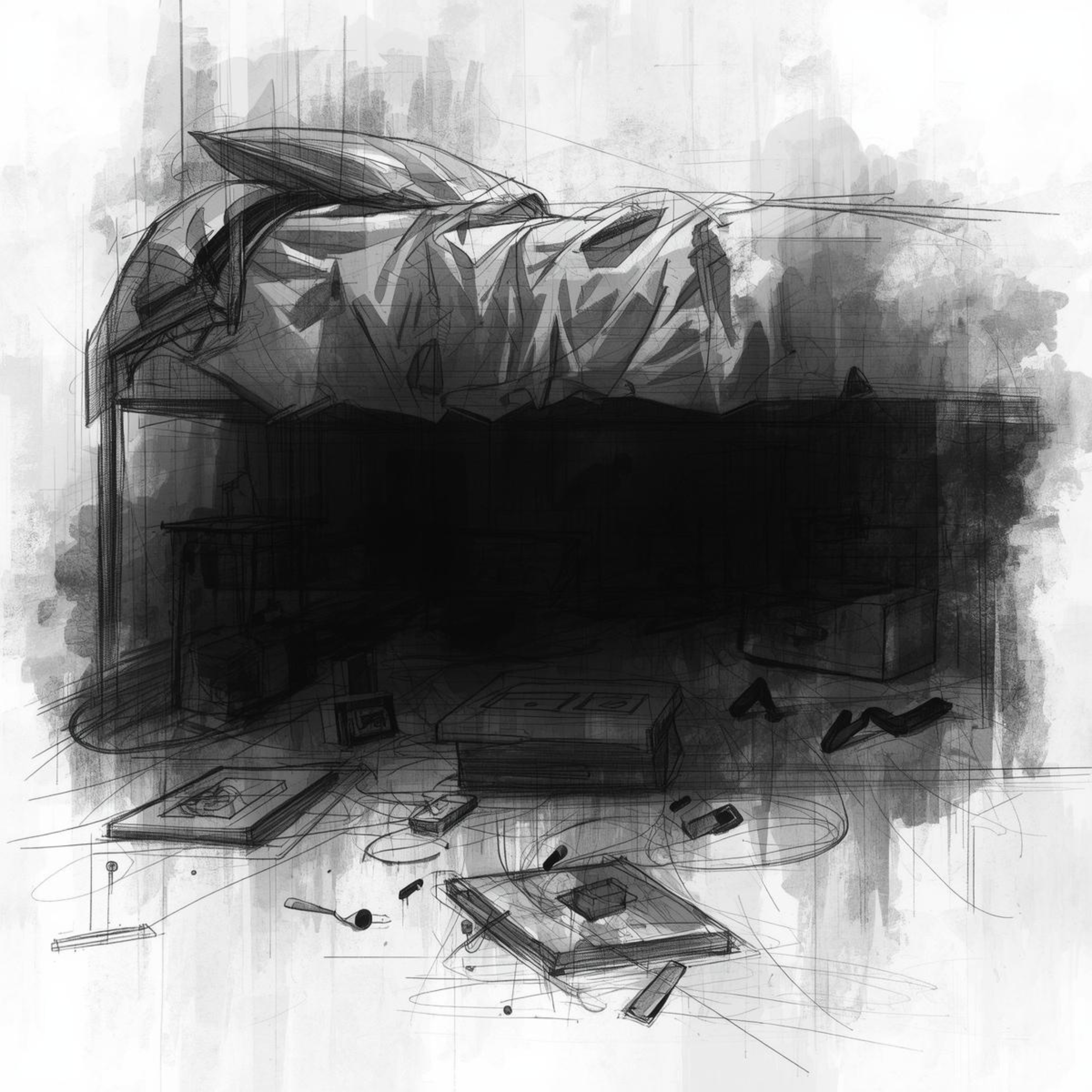
Instead of treating threats like disembodied boogeymen, we turn on the lights and look under the bed.
This idea must die: our emotions make us irrational and weak, and they must be mastered for reason to prevail.
I grew up thinking that my emotions were an overwhelming force that drove me to do things I would later regret. I told myself my anger would burn everything I loved down, and fear would keep me stuck in inaction, unable to do hard things.
But our emotions aren’t a bug; they’re a fundamental part of our operating system.
Neuroscientist Antonio Damasio’s research highlights how people with brain damage to their emotional centers (the ventromedial prefrontal cortex) lose the ability to make basic decisions. It took someone hours to choose between two pens or to decide what to eat — there was no emotional pull toward one choice over the other. Presented with choosing between something safe and something risky, people with this condition continued to make poor, risky choices, even when they could logically explain why one choice was better than the other.
The real problem, the reason we feel paralyzed by fear and lash out at those we love when we’re angry, is our inability or unwillingness to fully engage with our emotions.
To navigate our lives and relationships masterfully, we need to understand our emotional state and surroundings. Emotional literacy and intelligence are skills that help us understand ourselves, the path we’re on, and the people we surround ourselves with. It’s like gaining a sixth sense to help us make sense of being human.
The Reason We Have Emotions
What is the function of emotions, evolutionarily speaking? One way to think of emotions is as signposts telling us we need to take action. When we don’t notice and act on an emotion, or when we act in a way that’s incongruent to the emotion, we aren’t able to fully experience that emotion.
When we are disconnected from our emotional landscape and the action our emotions require of us, those emotions don’t just go away. They bide their time, waiting for the next opportunity to make themselves heard. And if we ignore them chronically, we solidify patterns that keep us stuck in inaction, deaf to our emotions’ call to action.
Uncertainty, Fear, and Anxiety
Fear is the most common emotion we experience when we’re faced with uncertainty. We perceive uncertainty or a lack of control as a potential threat, and fear is the emotion associated with threats to our safety.
From an evolutionary perspective, our brains are primarily wired to respond to fear by running or hiding (sometimes fawning or fighting). These are excellent and appropriate responses to the kinds of threats humans faced while living on the savannah in small villages. Our fear mechanisms are optimized to respond to threats like predators, floods, and other people who are stronger than we are.
Today, these instinctual responses to fear often fail us. Running, hiding, and fighting aren’t effective ways to address threats like financial insolvency, job loss, or identity theft. In the case of global, larger-than-life threats like climate change and pandemics, these responses are even more inadequate.
If we don’t engage directly with what’s causing us to feel fear and instinctively prompting us to run or hide, our minds end up in a does-not-compute limbo. Because we can’t fight climate change, hide from job loss, or run from identity theft. Our instinctual reactions to fear don’t resolve modern-day threats. When we ignore (hide from) our bank account, we just find ourselves thinking about it again later, even more unsure of what to do, more afraid, more likely to go back into hiding. This mental does-not-compute merry-go-round is anxiety.
The Hedonic Treadmill of Anxiety
Anxiety is the most common emotional response to uncertainty and fear. We find ourselves racked with anxiety, ruminating and spiraling because we’re unwilling to fully face some aspect of our lives, because we are unwilling to have an experience that feels unsafe (usually an emotion).
And, unintuitively, we become addicted to the meager, flimsy sense of certainty we get from rumination. The mechanism I think of as the Hedonic Treadmill of Anxiety looks like this:
There is a threat that can’t be resolved through our instinctual responses (run, hide, fight, fawn). It’s fears like “I might not be able to make the next credit card payment” or “Layoffs are coming, and my job might be on the chopping block.”
We’re unwilling to face the threat directly because it feels uncomfortable and unsafe, and fear instinctively drives us to run and hide instead. We don’t check our bank account balances. We avoid having an honest conversation with our boss about job security.
Since we don’t face the threat directly, we feel fear anytime we’re reminded of it, and we distract ourselves from those somatic and subconscious alarm signals by intellectualizing the problem.
We think about it real hard. We fantasize about worst-case scenarios. We construct narratives about catastrophes and about what we will do if the worst possible outcome occurs, creating a false sense of certainty about our future competence when things fall apart.
The false sense of certainty that comes from catastrophic if-then fantastical thinking gives us a small dopamine hit. Neurologically, it feels as though we are solving the problem, even as we distract ourselves from the simple, direct action required to address the current life-sized non-catastrophic threat.
Every time we are reminded of the threat (which remains unresolved), we experience the same fear, and we repeat the same process of fantastical worst-case-scenario problem-solving, releasing dopamine, making us more addicted to staying stuck in this cycle, never actually taking action, never actually addressing the threat.
How to Resolve the Fear and Anxiety
So how do we avoid these dopamine-reinforced cycles of anxiety and worst-case scenario thinking? We welcome the fear, fully allowing it to express itself in our mind and body, and we recognize that it’s there as a signal for us to take action. We face the threat directly, and we ask the fear what practical, realistic action it’s asking us to take. It might sound woo-woo, but give it a shot. Literally ask your emotion of fear what it wants you to do. What is one small, courageous step we could take to see the threat more clearly and create some safety for ourselves?
This is often all it takes to dispel the cycles of rumination and anxiety.
Instead of treating threats like disembodied boogeymen, we turn on the lights and look under the bed.
Returning to the example of one’s finances, we actually look at our checking account and credit card balance. We face the reality of whether we will make the payment. We dissolve the ambiguous, uncomfortable question that haunts us, replacing it with grounded truth. We give ourselves the clarity and perspective needed to identify our next best step. No rumination, no worst-case scenario fantasizing — just the life-sized truth of our situation and what we can reasonably, practically do to create more safety.
Sometimes, we’re surprised to find that there was nothing there to be afraid of. And even when the threat is real, we still feel relief, having replaced worst-case-scenario rumination with life-sized truth. We ground ourselves in the real, justified certainty of seeing the threat for what it is.
The bottom line: when faced with uncertainty, your fear is there to move you toward safety. Breaking the cycle of anxious rumination requires grounding ourselves in truth and taking that first small, courageous step.
